
Many residents will have noticed increased activity at Bentley Green over recent months and may be wondering exactly what is happening. Far from simply creating an orchard, Bentley Green Community Group has embarked on a long-term project to understand, protect and enhance the wildlife that already exists on the site.
From the outset we recognised that good conservation starts with good advice. We have therefore been extremely fortunate to receive support from a number of organisations and specialists. Hampshire & Isle of Wight Wildlife Trust has provided valuable guidance on the ecological potential of the site, while Ecology Works is generously undertaking a comprehensive Preliminary Ecological Assessment and an extensive programme of protected species surveys on a pro bono basis. We have also benefited from expert advice from the Hampshire Amphibian and Reptile Group, Butterfly Conservation and several local specialists, whose knowledge has helped shape our vision for Bentley Green.
Ecology and Conservation Management Plan
Using this expert advice, together with local knowledge and community consultation, the Bentley Green Community Group has adopted an Ecology and Conservation Management Plan with a practical Action Plan to guide the site’s stewardship over the coming years.
The philosophy behind the plans is deliberately simple. Rather than trying to redesign the site or create a formal park, we want to work with nature. Bentley Green already supports a surprising range of wildlife, and our aim is to protect and improve those existing habitats while allowing nature to recover gradually. Every management decision is intended to be evidence-led, proportionate and sympathetic to the wider landscape.
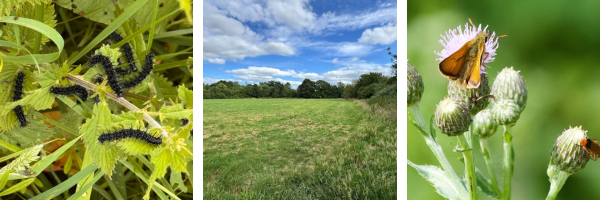
The Management Plan identifies different ecological zones across the site, recognising that different areas require different approaches. Mature hedgerows and ditches provide wildlife corridors and shelter, the central grassland will gradually develop into a species-rich meadow, the proposed orchard will provide blossom, fruit and habitat for pollinators, birds and small mammals, while opportunities will be explored to restore historic pond features. Throughout the site the emphasis is on minimal intervention, allowing natural processes wherever possible and carrying out management only where it delivers genuine ecological benefit.
Part of a Wider Network of Habitats
Looking beyond the boundaries of Bentley Green, the wider landscape makes the site even more significant. Great Crested Newts, one of Britain’s most protected amphibians, have been recorded at the Village Pond approximately half a mile away. Although none have yet been found on Bentley Green, an old pond on the western boundary has long since dried out and is identified within our Management Plan as having excellent potential for restoration. Subject to the necessary ecological surveys and consents, we hope in time to restore this historic pond. A well-designed wildlife pond can become one of the richest habitats in the countryside, supporting amphibians, dragonflies, damselflies, aquatic insects, birds, bats and a remarkable diversity of other wildlife.
Bentley Green also forms part of a much wider network of habitats. To the south, the River Wey is the focus of extensive conservation work to improve the river environment and encourage the return of wildlife, including otters and water voles. Together with the surrounding hedgerows, woodland, gardens and farmland, these habitats create an important ecological network. One of the guiding principles of our Management Plan is therefore to strengthen Bentley Green’s role within this wider landscape, creating stepping stones for wildlife rather than managing the site in isolation.
A Programme of Wildlife Surveys
Before deciding how any site should be managed it is essential to understand what wildlife is already present. This is known as establishing an ecological baseline. By recording species now, we will be able to measure how Bentley Green changes over the coming years and judge whether our management is successfully increasing biodiversity.
As part of this programme, Ecology Works has undertaken surveys for reptiles, bats and hazel dormice. These protected species require specialist survey techniques and, in some cases, repeated visits throughout the year. Seven reptile surveys using fifty artificial refugia have now been completed. No reptiles have yet been found, but that is still valuable information because it tells us how the site is currently being used and ensures that future management decisions are based on sound evidence rather than assumption.
Bat activity surveys are continuing throughout the summer to understand which species are using Bentley Green for feeding and commuting, while dormouse surveys will determine whether these elusive mammals are present within the boundary hedgerows before any significant hedge management is undertaken.
Birdlife has proved equally encouraging. On International Dawn Chorus Day, around fifteen local residents gathered at Bentley Green at 5.30 am to experience birdsong at first light. During the walk we heard more than 25 species of birds, including many of our familiar woodland and hedgerow birds.
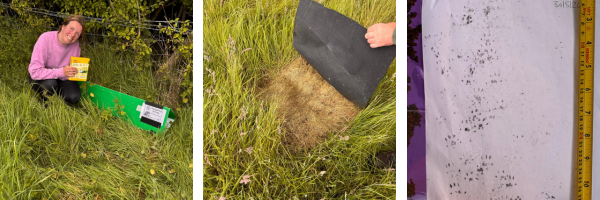
Community volunteers have also been carrying out a range of surveys. Hedgehog tunnels have been deployed around the site to record the footprints of animals using simple ink pads and recording cards. Although hedgehogs have not yet been detected, the tunnels have revealed plenty of activity from field voles and rats, all of which are an important part of a healthy ecosystem.
An initial flora survey has identified forty-seven species of flowering plants and grasses across Bentley Green, including Bird’s-foot Trefoil, Common Knapweed, Ox-eye Daisy, Common Centaury, Self-heal, Common Field Mallow and Meadow Vetchling. The survey has shown that different parts of the site support distinct plant communities, whilst the centre of the site is relatively sparse due to the extensive grazing. This provides the benchmark against which future improvements can be measured.
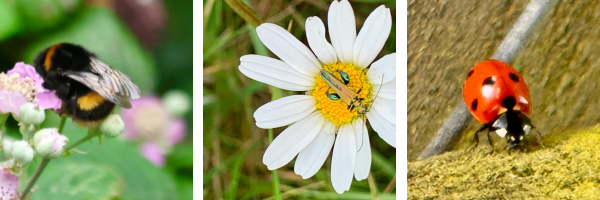
Our first monthly pollinator survey has been equally encouraging. Meadow Brown, Marbled White and Small Skipper butterflies were particularly abundant, together with Peacock and Small Tortoiseshell butterflies. Evidence of the beautiful Cinnabar Moth was also found and more than one hundred Peacock butterfly caterpillars were discovered feeding on a patch of nettles. These observations demonstrate why areas that may appear untidy are often among the most valuable habitats for wildlife.
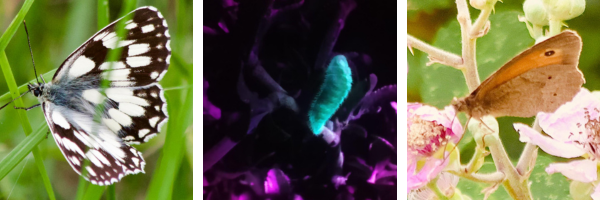
Butterfly Conservation has confirmed that Bentley Green’s blackthorn hedgerows provide excellent potential habitat for the rare Brown Hairstreak butterfly. On the advice of Butterfly Conservation we carried out an ultraviolet (UV) survey, using a UV torch after dark to search for the tiny caterpillars that uniquely show up in UV light, although none were found this year. We will continue searching for adult butterflies later in the summer and will carefully manage selected areas of blackthorn by creating gently scalloped edges that encourage fresh growth while retaining this valuable habitat.
Cut & Collect and Conservation Grazing
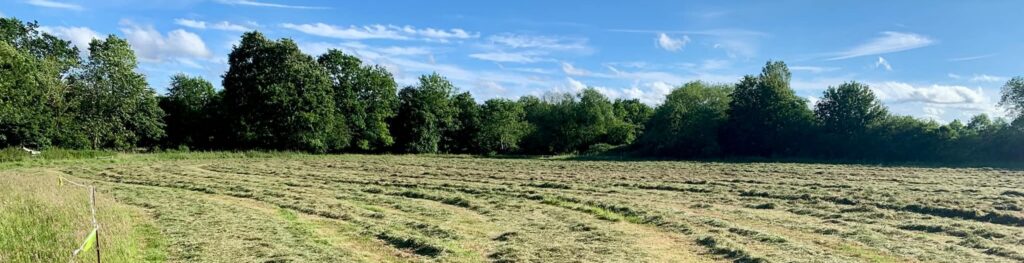
Looking beneath the surface is equally important. Soil testing has shown that the site has relatively high phosphate levels, largely reflecting its previous use for equestrian grazing. High nutrient levels encourage coarse grasses but make it difficult for many wildflowers to flourish. For this reason we are enormously grateful to Matt, who recently harvested the meadow and removed seventeen bales of hay. This “cut-and-collect” approach gradually removes nutrients from the site and is one of the most effective ways of restoring a traditional wildflower meadow.
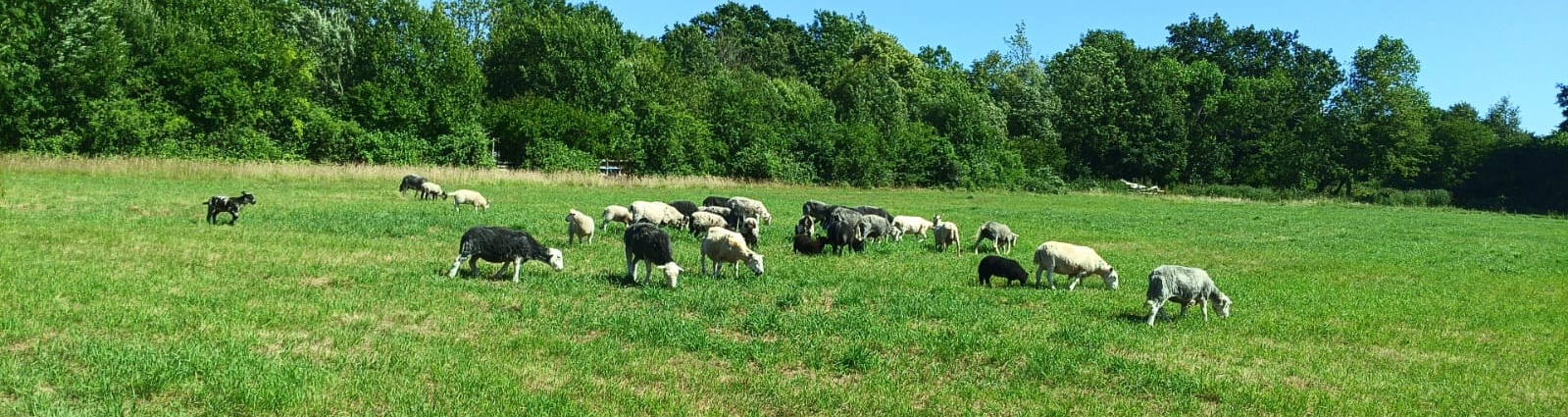
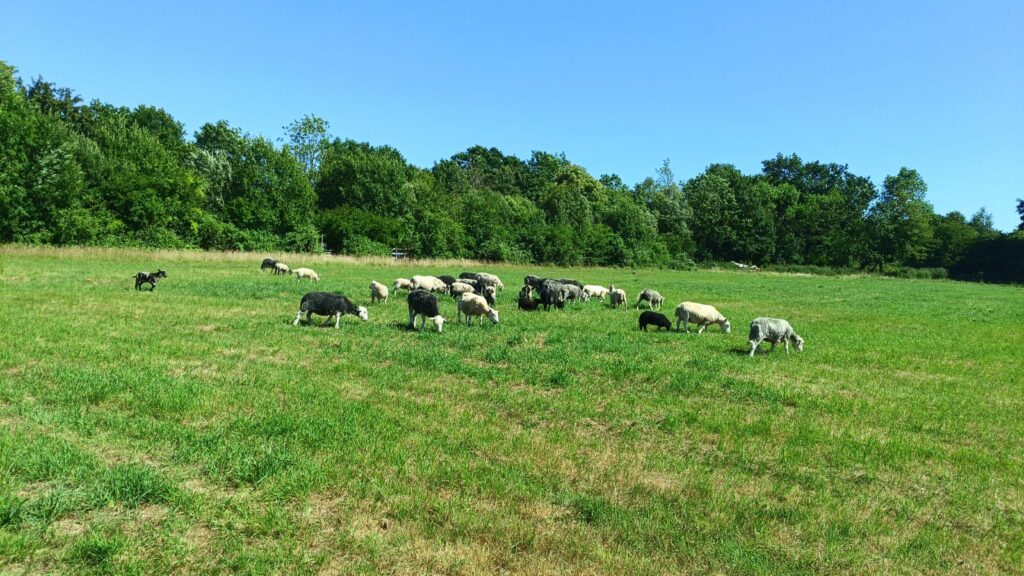
Over the coming weeks Leisa, our shepherdess, will bring more than forty sheep onto Bentley Green for conservation grazing. Carefully controlled grazing creates a varied grassland structure, naturally suppresses coarse grasses and encourages greater plant diversity, benefiting butterflies, bees and countless other insects.
Community Volunteers
One of the most rewarding aspects of the project has been the enthusiasm shown by local volunteers. Bentley Green is very much a community project. Residents have been helping with wildlife surveys, recording species and monitoring habitats, while our local Beaver Scouts are building a bug hotel that will provide shelter for insects and become another feature of the site. We hope many more people will become involved over the coming months because everyone can play a part in understanding and protecting our local wildlife.
There will shortly be an opportunity to join us for a community blackthorn management morning. Using specialised “tree poppers”, we will be removing selected young blackthorn suckers to prevent them spreading into the meadow while retaining the mature hedgerows that are so valuable for wildlife. It is an enjoyable activity that avoids the use of herbicides and helps maintain the balance between scrub and open grassland.
Bentley Green is not a project that will be completed in a year or two. Nature recovery is measured over decades. Our aim is not to introduce large numbers of new species, but to create the right conditions for the wildlife that already belongs naturally within this part of Hampshire to thrive. By improving habitats, strengthening links with the surrounding countryside and involving the whole community, we hope Bentley Green will become an increasingly important refuge for wildlife and a place of which the whole village can be proud.
If you would like to become involved in future surveys, volunteer days or habitat management events, we would be delighted to have your help in creating a home for wildlife. Email bentleywildlife@gmail.com to get involved.